
An editorial reflection by Dr Megan Ogilvie.
There is something strangely reassuring about realising that debates around contraception are not new.
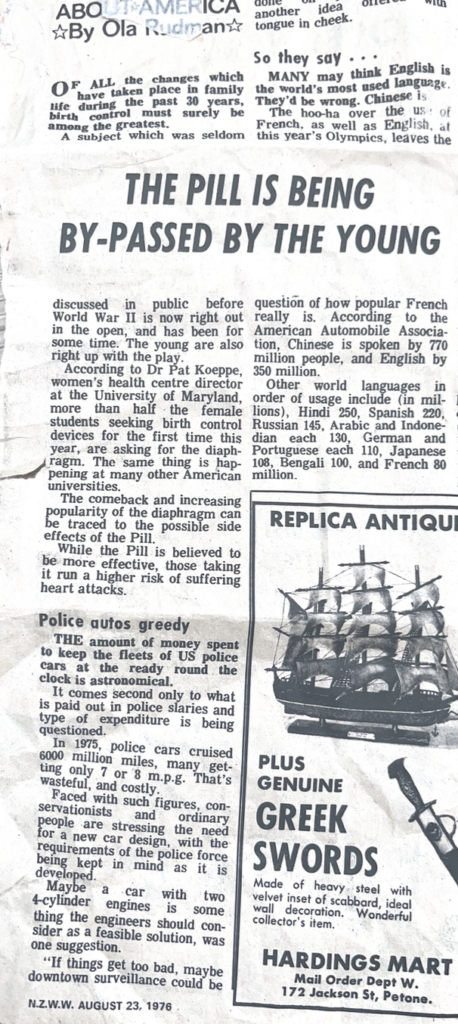
A recently rediscovered 1976 edition of New Zealand Woman’s Weekly featured the headline “The pill is being bypassed by the young”, discussing concerns among young women about side effects from the oral contraceptive pill and a reported increase in diaphragm use. Nearly 50 years later, the language has changed, but the themes feel remarkably familiar.
Today, social media platforms are filled with claims that the pill is “evil,” “toxic,” or fundamentally “personality changing.” Influencers and wellness accounts often frame hormonal contraception as something women should “detox” from, with anecdotes frequently presented as evidence. The modern conversation is amplified by algorithms, aesthetics, and commercial interests in a way that the 1970s magazine landscape never could have imagined. Nevertheless, underlying concerns about autonomy, side effects, and trust in medicine have persisted across generations.
What is striking is that each era tends to rediscover the same tension: balancing understandable caution about medication side effects with the realities of evidence-based medicine and reproductive choice. The contraceptive pill has never been a completely risk-free medication, and good medicine requires acknowledging that clearly and honestly. At the same time, it is one of the most extensively studied medications in women’s health, with decades of long-term safety data available.
Current evidence shows that combined oral contraceptive pills are associated with:
- a small increased risk of venous thromboembolism (blood clots),
- a very small increased risk of stroke,
- and a very small increase in breast cancer risk while using the pill.
Importantly, the increased breast cancer risk declines after stopping the pill and resolves approximately five years after cessation. These risks also need to be balanced against important benefits, including reliable contraception, cycle control, reduction in menstrual pain and bleeding, management of conditions such as endometriosis, PMDD and PCOS, and reduced risks of ovarian and endometrial cancer.
Perhaps the most useful lesson from both 1976 and 2026 is that women deserve nuanced conversations rather than extremes. Neither “the pill is dangerous” nor “the pill is harmless” tells the full story. Good contraceptive care has always been about informed choice, individual risk assessment, and finding the right option for the right person at the right stage of life.


Comments +