
UPDATE – February 2026: Testosterone gel use in women
There has been renewed public discussion about the use of Testogel in women as Pharmac meets to consider funding androfeme this month.
Testosterone can be helpful for a small, carefully selected group of peri- and post-menopausal women, most commonly for hypoactive sexual desire disorder (HSDD), when used at doses that keep levels within the normal female range.
However, Testogel and similar gels are formulated, studied, and approved for use in men, not women. They deliver doses far higher than women typically require, and there is no robust long-term safety evidence supporting their use in women. Evidence gaps include:
- No reliable dosing studies in women
- No long-term safety outcome data
- Only one very small study (10 women), which did not examine the pump formulation funded in New Zealand
Because women require very small, precise doses, even minor dosing errors can result in supraphysiological testosterone levels, with risks including acne, excess hair growth, scalp hair thinning, voice deepening, and clitoral enlargement — some of which may be irreversible.
International expert bodies, including the International Society for the Study of Women’s Sexual Health and the Endocrine Society, consistently advise that testosterone in women should be:
- Used only when clearly indicated
- Monitored with blood levels
- Prescribed using formulations not designed for men, where possible
There are testosterone preparations specifically developed for women, using lower doses, more accurate delivery, and female-specific safety data. From both a safety and equity perspective, women deserve access to treatments designed for female physiology and supported by evidence.
Our position has not changed: testosterone for women requires careful prescribing, informed consent, and evidence-based formulation choice. Male-formulated gels have not been adequately studied in women and may carry avoidable risk.
Originally posted 2024:
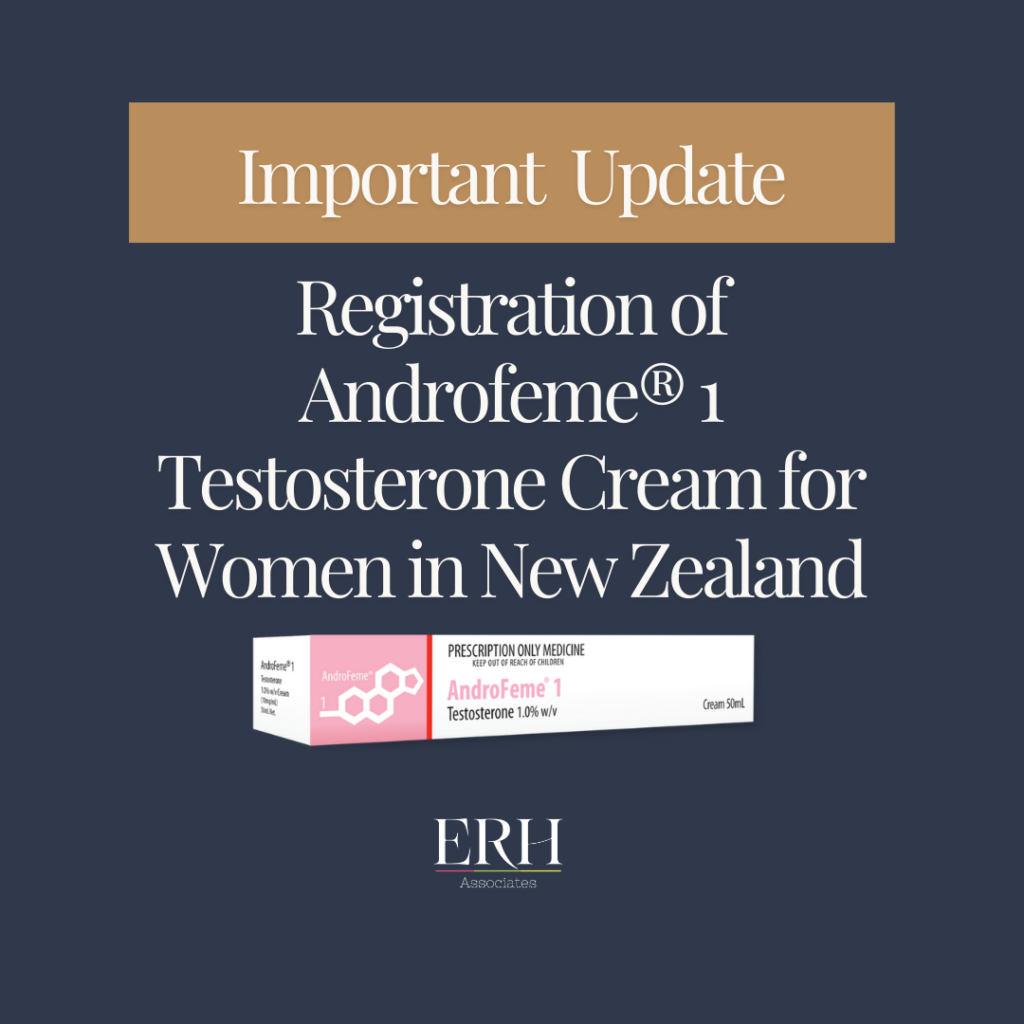
We were pleased to see that Androfeme® 1, a testosterone cream made specifically for postmenopausal women, has now been registered for use in New Zealand.
Testosterone can sometimes help women during peri- and post-menopause, particularly when low sexual desire is causing distress (known as Hypoactive Sexual Desire Disorder, or HSDD). It is not routinely recommended for other menopause symptoms like low mood, energy, or brain fog.
You can read more about when testosterone treatment is appropriate for women in our article here.
Androfeme® 1 is a 1% testosterone cream that is applied once daily to the skin, using a special applicator to measure the right amount. It has been carefully developed and studied for use in women and is already registered in Australia for the same purpose.
Having a female-specific testosterone option now registered in New Zealand is a positive step. Previously, women who needed testosterone had to use products designed for men, often in much smaller doses — which can be less safe and harder to manage.
At this stage, however, Androfeme® 1 is not funded by Pharmac, so it will still involve private cost (normal doctor’s fees plus the cost of the cream).
What about Testogel?
If you are wondering about Testogel — the testosterone gel recently funded in New Zealand for use in men — we discuss this in detail in our separate article here, including why we do not routinely recommend Testogel for women.
Important points about testosterone treatment for women:
- Testosterone cream can be considered for women with menopausal HSDD, after other possible causes have been looked at, and usually as an addition to standard oestrogen-containing menopausal hormone therapy.
- Blood tests should be done before starting treatment, and again after 6 weeks, to make sure levels are in the safe range.
- Doses should be adjusted carefully — more is not better.
- If there is no benefit after six months of treatment, it is usually recommended to stop.
Our Perspective:
The registration of Androfeme® 1 gives women and their doctors a licensed, purpose-designed option for managing low sexual desire after menopause. However, there is still a long way to go in making hormone treatments for women as available and affordable.
We continue to support efforts to improve access to safe, evidence-based treatments for women in Aotearoa.
Note:
We do not have funded affiliations with manufacturers or distributors of Androfeme, or any other medications/treatments mentioned above. This article reflects our clinical experience as endocrinologists, our review of the available evidence, and communications with international colleagues.
For more updates on hormone health, visit erhassociates.co.nz or follow us @erhassociatesnz.


Comments +